Fix sideways PDF pages while keeping the document usable
A document can be readable on most pages and awkward on one landscape scan.

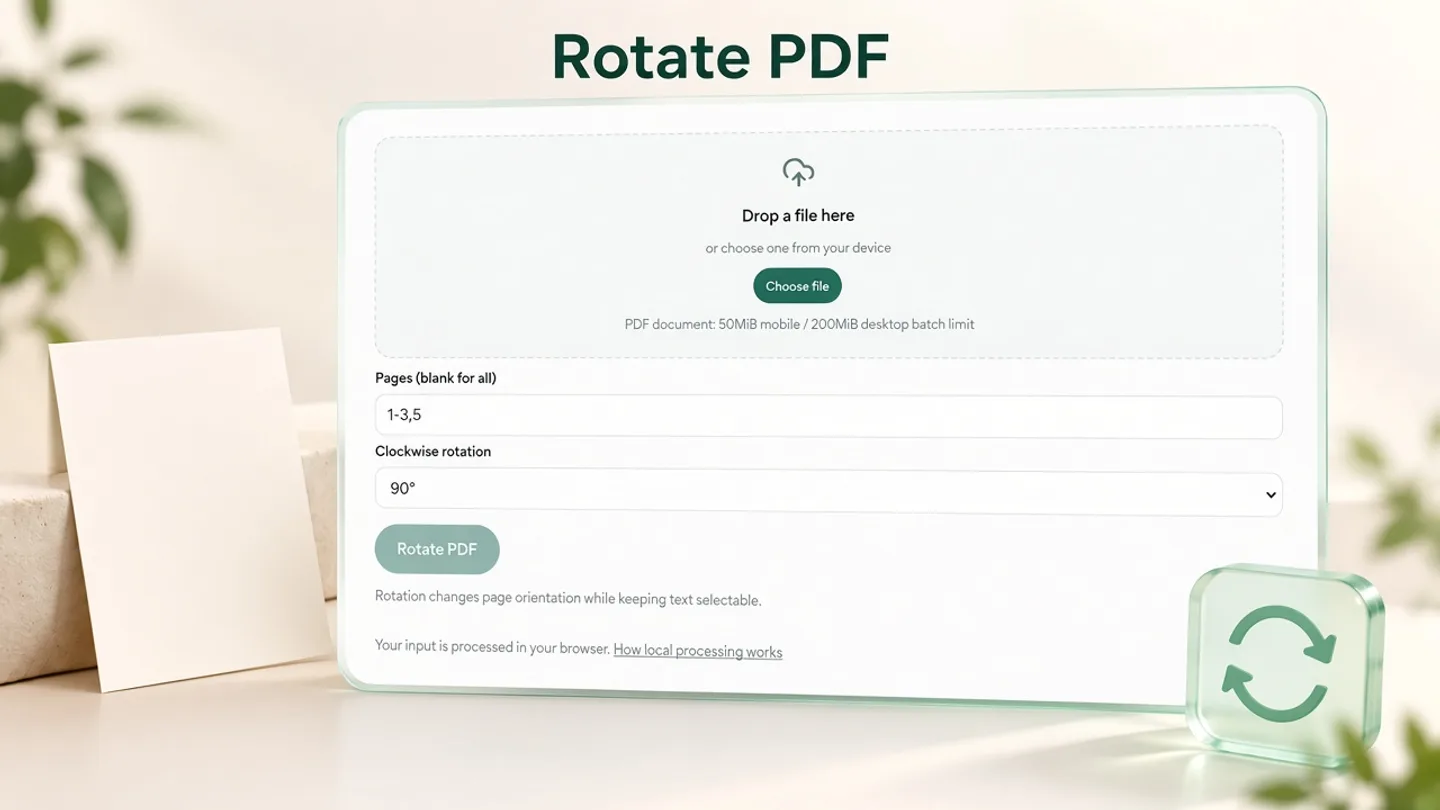
A document can be readable on most pages and awkward on one landscape scan. Rotating the whole file may fix that page while making the rest worse. Use the original page positions to target only the pages that need a turn.
This guide uses Klyvero Tools Rotate PDF for a focused workflow: fix sideways PDF pages while keeping the document usable. The aim is a result you can inspect and use with confidence, while keeping the source available for corrections.
Open the tool to follow this Rotate PDF workflow in your browser.
Identify pages by their original positions
Keep the original PDF and make a note of the pages involved in your task. A viewer’s page position can differ from the number printed inside the document because a cover or introduction comes first. When a control accepts page ranges, use the original positions expected by that control and check the first affected thumbnail.
Use a small representative section when exploring a new operation. Include a normal text page and a page with a diagram or scan if the document has both. A successful first page does not establish that every page has the same structure. After exporting, check the final page as well, because a missing appendix or unintended range can be easy to overlook.
Choose settings for the task
Choose the desired angle and, when necessary, enter a page range. Rotation changes page orientation while keeping existing selectable text available. It does not rearrange the page sequence or rewrite the words and printed numbers. Inspect thumbnails or a PDF viewer first to separate orientation problems from order problems.
Use Rotate PDF step by step
- Open the PDF and note the sideways original page positions.
- Choose the angle needed to make them upright.
- Enter the affected page or range when others should stay unchanged.
- Create and download the rotated copy.
- Check changed pages and their neighbors in a PDF viewer.
Work through a small representative input before applying the operation more broadly. Keep track of the settings you chose so an unexpected result can be reproduced and corrected.
A practical example
For a report with sideways pages 2 and 3, choose those positions and a clockwise quarter turn. Save the changed PDF, reopen it and inspect pages 1 through 4. The neighboring pages should retain their expected orientation while the selected scans become comfortable to read.
Understand the limitations
Rotation preserves existing text layers rather than recognizing new text. A blank range may apply the operation more broadly than intended, so review the selected-page control before creating the output.
A rewritten PDF can behave differently from the original at the document level. If signatures, forms, bookmarks or other interactive features matter, check them separately in a suitable viewer rather than assuming that intact page thumbnails prove everything survived. Keep signed originals when signature validity matters.
Review the result before using it
Check the result in the viewer the recipient is likely to use. A scanned page remains a scanned image even when upright, so rotation does not add searchable text. If the reading order is also wrong, repair that separately with the page reordering workflow.
The live tool describes local browser processing. Processing assets may still need to download before the operation can run. Save the finished output before clearing the tool or leaving the tab, and confirm that the copy you use is the reviewed result.
Frequently asked questions
Can I rotate just one page?
Yes. Enter that original page number and select the angle. Reopen the result to confirm other pages were left upright.
Do I still need the original PDF?
Yes. Keep it for comparison and for any document features needed later. A downloaded copy is a separate result, and a change that solves one task may not preserve every behavior of the source.
Does a completed operation mean the result is ready to share?
Open or inspect the saved output first. Confirm the settings, selected content and destination requirements, and keep the source until the reviewed copy works as intended.
Useful next steps
- Merge PDF: A related pdf workflow when your next task needs it.
- Image to PDF: A related pdf workflow when your next task needs it.
- Explore Klyvero Labs products: Browse our apps and browser tools.
Ready to try this workflow? Open Rotate PDF, start with a representative input and review the saved result. Try the tool free.
Back to all articles