Export PDF pages as PNG when sharp edges matter
A PDF page contains a diagram or text-heavy layout that needs to be shown as a picture.

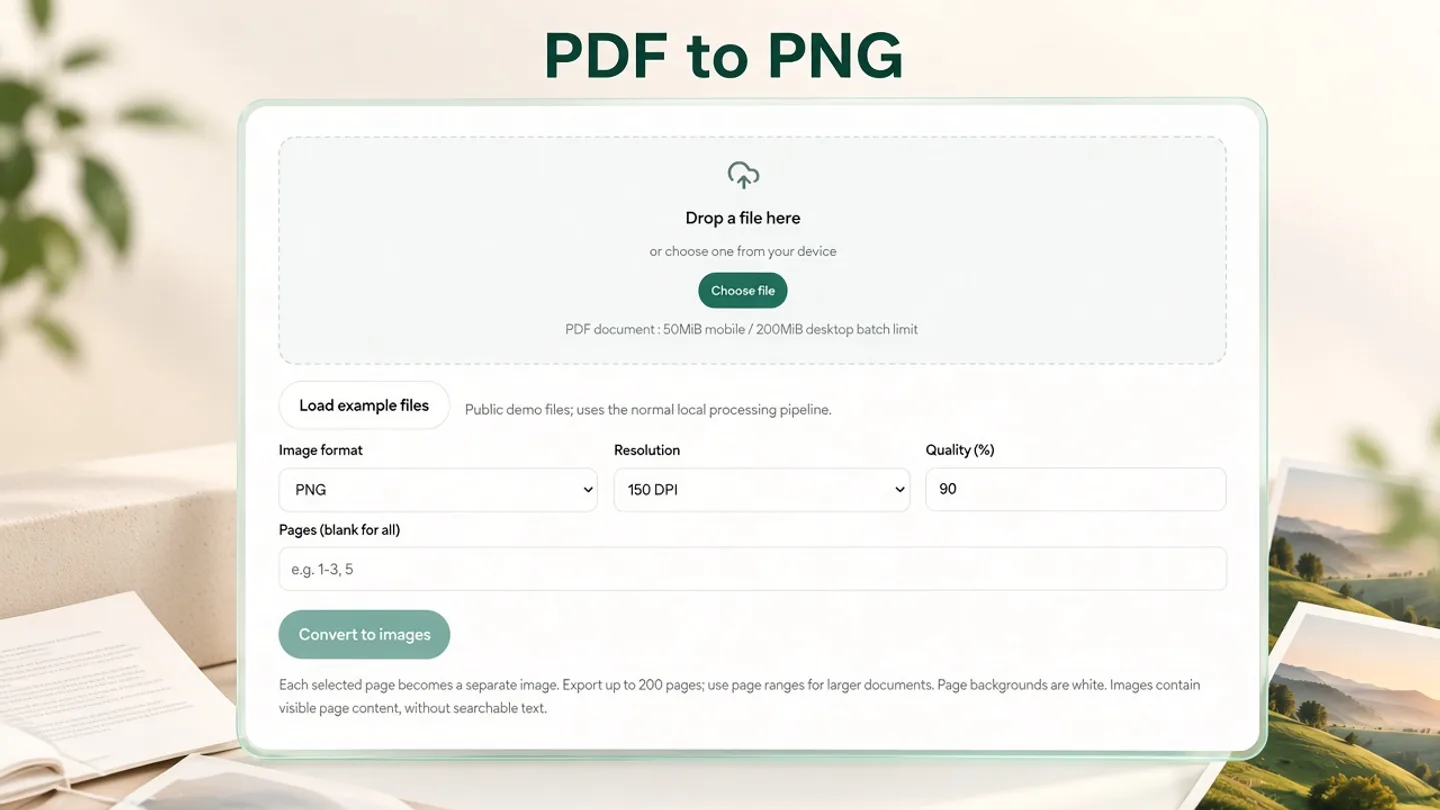
A PDF page contains a diagram or text-heavy layout that needs to be shown as a picture. PNG can preserve the rendered pixels without JPEG-style compression artifacts. The raster resolution still determines how much detail is present in those pixels.
This guide uses Klyvero Tools PDF to PNG for a focused workflow: export PDF pages as PNG when sharp edges matter. The aim is a result you can inspect and use with confidence, while keeping the source available for corrections.
Open the tool to follow this PDF to PNG workflow in your browser.
Choose resolution for the way the preview will be used
The documented resolution choices include 72 DPI for small previews, 150 DPI for everyday sharing and 300 DPI for finer detail. A larger number produces more pixels for the same page dimensions, which increases memory use and often file bytes. Start with the intended display or print size rather than choosing the highest value automatically.
For a text-heavy page, inspect the smallest label at the width where readers will see it. For a photographic page, look at gradients and edges as well as the file size. Export a representative page first when a large document would otherwise create many unnecessary images. Keep enough context around selected pages so the preview does not misrepresent the document.
Choose settings for the task
The page-conversion workflow offers PNG, JPG and WebP; choose PNG for this use case. Enter original page ranges starting at one, or leave the range blank for all pages. Overlapping selections export each page once, in first-listed order. The documented limit is up to 200 pages in one conversion, with memory and output-size limits also applying.
Use PDF to PNG step by step
- Choose one supported unencrypted PDF.
- Select the original pages needed for the preview.
- Choose PNG and a suitable DPI.
- Convert and inspect the rendered page images.
- Download individual images or the complete ZIP and test the destination.
Work through a small representative input before applying the operation more broadly. Keep track of the settings you chose so an unexpected result can be reproduced and corrected.
A practical example
For a flowchart on page three, choose PNG and export that page at a resolution suitable for the intended display. Inspect tiny node labels and arrowheads. If the image is too large in bytes for its destination, adjust the page selection or resolution deliberately instead of assuming PNG is always a small-file choice.
Understand the limitations
Password-protected PDFs are rejected. A rendered image does not retain selectable text, links or interactive fields. Large pages and high DPI can exceed browser memory or the 200MiB output limit; use fewer pages or a lower resolution.
A set of page images is a different deliverable from a PDF. Provide the original document separately when readers need text selection, links or forms. Give the image files clear names so their order remains understandable after they are copied into a message, slide deck or publishing system.
Review the result before using it
Check the displayed image at its final width and inspect the smallest important label. PNG is lossless for the rendered pixels, but it is still a picture of a document page rather than the original text and vector structure.
The live tool describes local browser processing. Processing assets may still need to download before the operation can run. Save the finished output before clearing the tool or leaving the tab, and confirm that the copy you use is the reviewed result.
Frequently asked questions
Does an image keep PDF links and selectable text?
No. The visible page becomes pixels on a white background. Keep the original PDF when its document features are needed.
Should I render pages or extract embedded pictures?
Render pages when you need their complete visible layout. Extract embedded pictures when you need separate raster assets stored inside the PDF. Vector drawings and text may not exist as separate images.
Does a completed operation mean the result is ready to share?
Open or inspect the saved output first. Confirm the settings, selected content and destination requirements, and keep the source until the reviewed copy works as intended.
Useful next steps
- Merge PDF: A related pdf workflow when your next task needs it.
- Image to PDF: A related pdf workflow when your next task needs it.
- Explore Klyvero Labs products: Browse our apps and browser tools.
Ready to try this workflow? Open PDF to PNG, start with a representative input and review the saved result. Try the tool free.
Back to all articles