Turn selected PDF pages into useful image previews
A page needs to appear in a message or slide without asking the viewer to open a PDF.

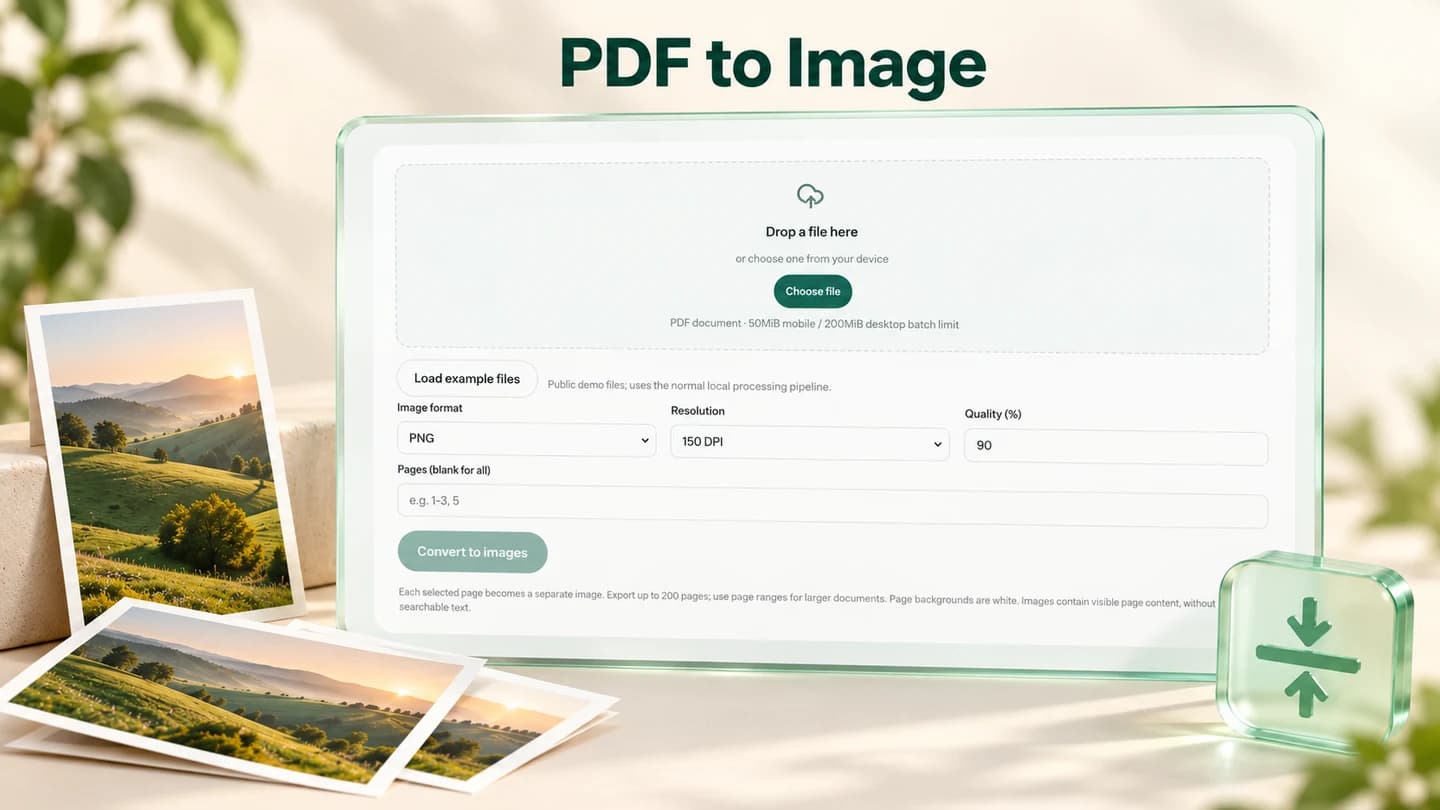
A page needs to appear in a message or slide without asking the viewer to open a PDF. Page rendering creates a picture of the complete page. Choose it when the layout matters, rather than when you need separate photographs embedded inside the document.
This guide uses Klyvero Tools PDF to Image for a focused workflow: turn selected PDF pages into useful image previews. The aim is a result you can inspect and use with confidence, while keeping the source available for corrections.
Open the tool to follow this PDF to Image workflow in your browser.
Choose resolution for the way the preview will be used
The documented resolution choices include 72 DPI for small previews, 150 DPI for everyday sharing and 300 DPI for finer detail. A larger number produces more pixels for the same page dimensions, which increases memory use and often file bytes. Start with the intended display or print size rather than choosing the highest value automatically.
For a text-heavy page, inspect the smallest label at the width where readers will see it. For a photographic page, look at gradients and edges as well as the file size. Export a representative page first when a large document would otherwise create many unnecessary images. Keep enough context around selected pages so the preview does not misrepresent the document.
Choose settings for the task
The page-conversion workflow offers PNG, JPG and WebP; choose PNG, JPG or WebP for this use case. Enter original page ranges starting at one, or leave the range blank for all pages. Overlapping selections export each page once, in first-listed order. The documented limit is up to 200 pages in one conversion, with memory and output-size limits also applying.
Use PDF to Image step by step
- Choose one supported unencrypted PDF.
- Select the original pages needed for the preview.
- Choose PNG, JPG or WebP and a suitable DPI.
- Convert and inspect the rendered page images.
- Download individual images or the complete ZIP and test the destination.
Work through a small representative input before applying the operation more broadly. Keep track of the settings you chose so an unexpected result can be reproduced and corrected.
A practical example
For a report preview, enter pages 1-3, 5 and export at 150 DPI. That selection represents four page images. Check the cover, the end of the three-page range and page five before sharing the set. Choose PNG for sharp diagrams or a lossy format when a smaller photographic preview is more important.
Understand the limitations
Password-protected PDFs are rejected. A rendered image does not retain selectable text, links or interactive fields. Large pages and high DPI can exceed browser memory or the 200MiB output limit; use fewer pages or a lower resolution.
A set of page images is a different deliverable from a PDF. Provide the original document separately when readers need text selection, links or forms. Give the image files clear names so their order remains understandable after they are copied into a message, slide deck or publishing system.
Review the result before using it
Compare the full page composition and small labels. The output includes the visible page rather than editable elements. Check the actual image dimensions and bytes before placing it on a website.
The live tool describes local browser processing. Processing assets may still need to download before the operation can run. Save the finished output before clearing the tool or leaving the tab, and confirm that the copy you use is the reviewed result.
Frequently asked questions
Does an image keep PDF links and selectable text?
No. The visible page becomes pixels on a white background. Keep the original PDF when its document features are needed.
Should I render pages or extract embedded pictures?
Render pages when you need their complete visible layout. Extract embedded pictures when you need separate raster assets stored inside the PDF. Vector drawings and text may not exist as separate images.
Does a completed operation mean the result is ready to share?
Open or inspect the saved output first. Confirm the settings, selected content and destination requirements, and keep the source until the reviewed copy works as intended.
Useful next steps
- Merge PDF: A related pdf workflow when your next task needs it.
- Image to PDF: A related pdf workflow when your next task needs it.
- Explore Klyvero Labs products: Browse our apps and browser tools.
Ready to try this workflow? Open PDF to Image, start with a representative input and review the saved result. Try the tool free.
Back to all articles