Recognize a scanned document and check the text page by page
A scanned PDF may look like a text document while containing only pictures.

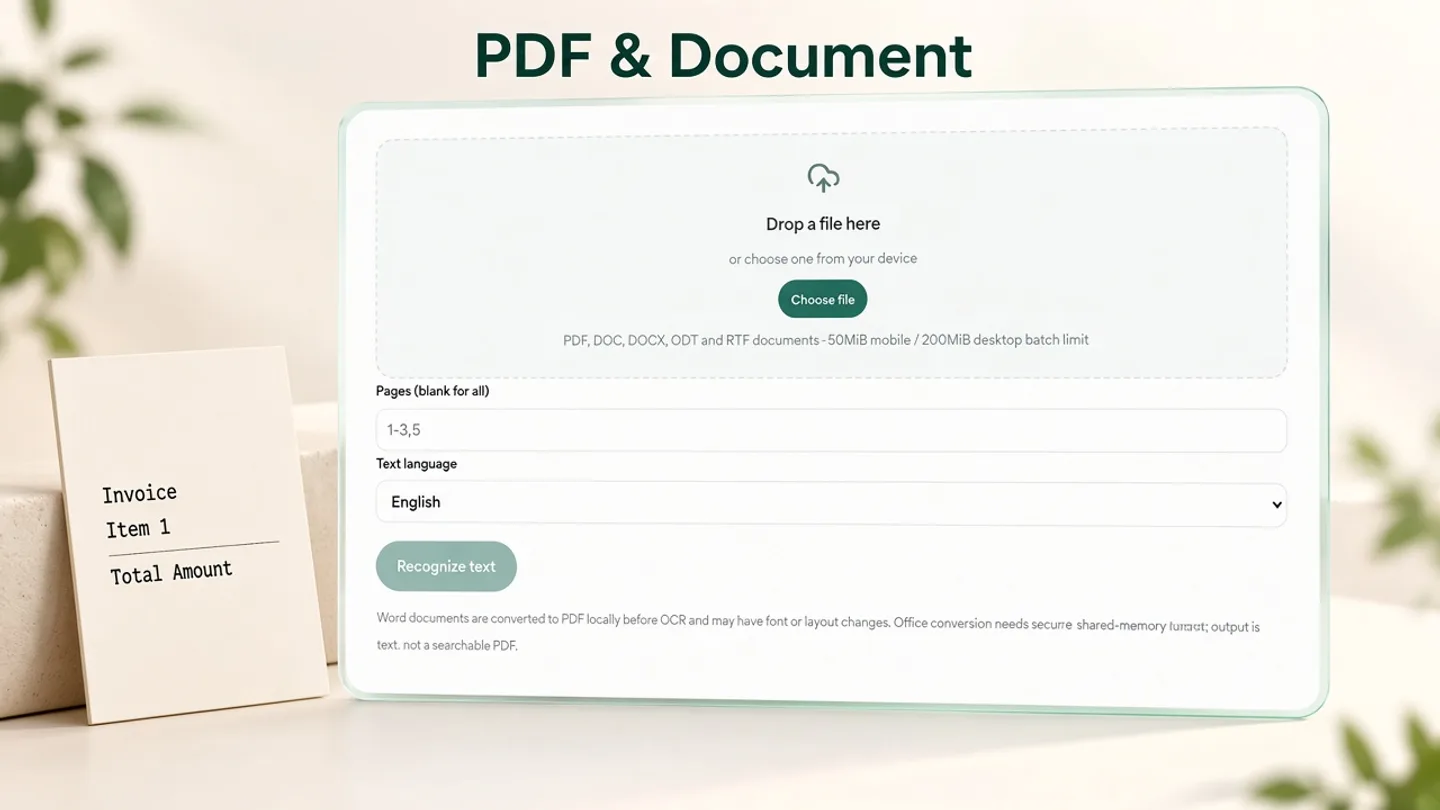
A scanned PDF may look like a text document while containing only pictures. Extracting a text layer cannot help when there is no layer to extract. Document OCR attempts to recognize the visible English words and produces plain text you can review and edit.
This guide uses Klyvero Tools PDF & Document OCR for a focused workflow: recognize a scanned document and check the text page by page. The aim is a result you can inspect and use with confidence, while keeping the source available for corrections.
Open the tool to follow this PDF & Document OCR workflow in your browser.
Prepare a clear source before recognition
OCR depends on the letters visible in the input. Choose a sharp source, keep the page upright and retain the full edges of every line. Heavy shadows, skew and tiny text reduce the information available to the recognizer. Improving the source is often more useful than repeating recognition on the same blurred image.
Start with one representative page. Compare names, dates, totals and identifiers character by character before processing a long batch. A plausible-looking word can still be wrong, and a missing minus sign or decimal point can change the meaning. For multiple columns, check the reading order separately from whether individual words were recognized.
Choose settings for the task
The documented inputs are PDF, DOC, DOCX, ODT and RTF. English is selected in this workflow. Word documents are first converted to PDF locally, which can introduce font or layout differences before recognition. Office conversion also needs secure shared-memory support and substantial browser resources.
Use PDF & Document OCR step by step
- Choose a supported scanned document.
- Select the relevant pages and confirm the English workflow.
- Allow any required local conversion assets to load.
- Recognize and compare the text with each source page.
- Copy or download TXT after correcting recognition errors.
Work through a small representative input before applying the operation more broadly. Keep track of the settings you chose so an unexpected result can be reproduced and corrected.
A practical example
For a scanned notice, start with a clear upright page containing a heading and one paragraph. Choose that page and recognize it. Compare the heading, names, dates and reference numbers with the scan before processing a long document. A useful trial makes layout or quality problems visible early.
Understand the limitations
The output can be copied or downloaded as TXT. It does not write a searchable text layer into the PDF. OCR can misread important characters, and local Office conversion may change the layout it sees.
Plain-text output needs its own structure after recognition. Paragraph spacing, columns and tables may require manual editing, but correct the characters first. Keep the source available until the reviewed text has been saved and used successfully in the receiving application.
Review the result before using it
Review one page at a time so a missing section does not disappear into a long text output. Tables and multiple columns can require manual reordering. If the document already contains selectable text, try ordinary text extraction first instead of recognizing the rendered letters again.
The live tool describes local browser processing. Processing assets may still need to download before the operation can run. Save the finished output before clearing the tool or leaving the tab, and confirm that the copy you use is the reviewed result.
Frequently asked questions
Will this create a searchable PDF?
No. It exports recognized text for copying or TXT download. A searchable-PDF text layer is a different workflow.
Can I use the recognized text without checking it?
Review it against the source first. Recognition can omit or misread characters and change reading order. Important values need direct comparison even when the surrounding paragraph looks fluent.
Does a completed operation mean the result is ready to share?
Open or inspect the saved output first. Confirm the settings, selected content and destination requirements, and keep the source until the reviewed copy works as intended.
Useful next steps
- Merge PDF: A related pdf workflow when your next task needs it.
- Image to PDF: A related pdf workflow when your next task needs it.
- Explore Klyvero Labs products: Browse our apps and browser tools.
Ready to try this workflow? Open PDF & Document OCR, start with a representative input and review the saved result. Try the tool free.
Back to all articles